

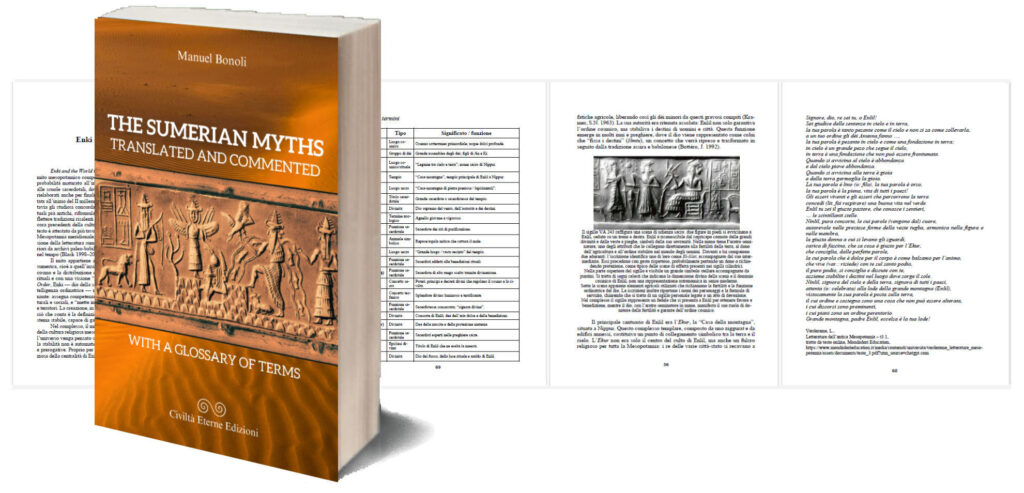

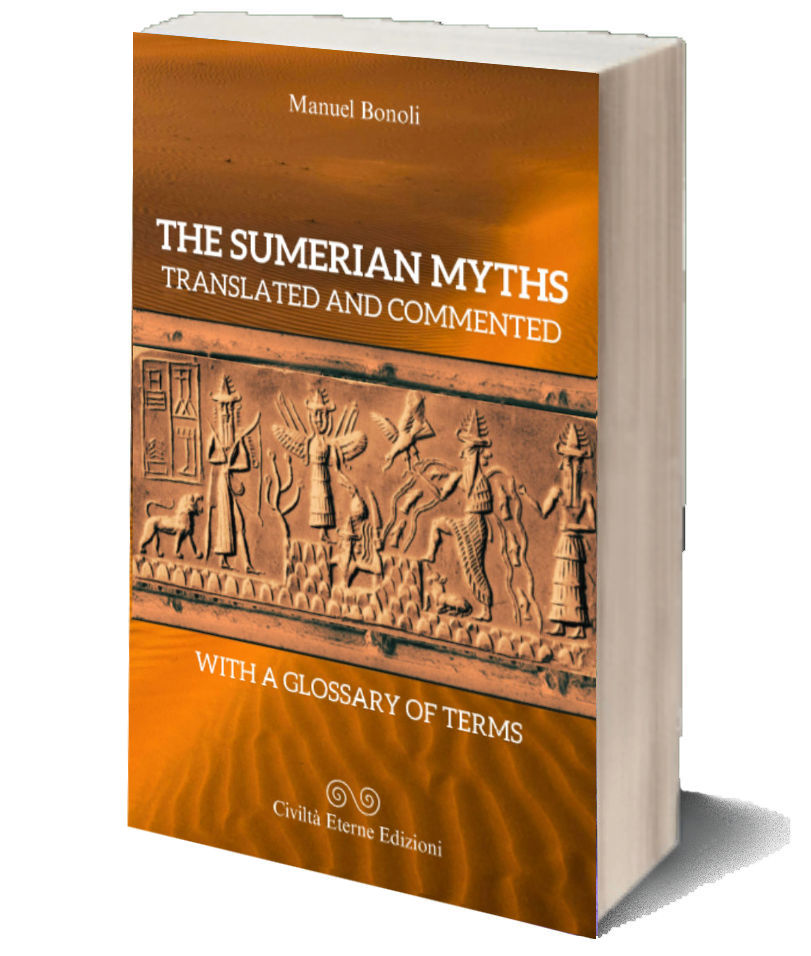
The new book by Manuel Bonoli, author of Civiltaeterne.it, titled Sumerian Myths Translated and Commented: With a Glossary of Terms, is now available. This work is dedicated to the study and understanding of the oldest religious narratives of Mesopotamia.
Sumerian mythology represents one of the earliest testimonies of human thought: through the cuneiform tablets that have survived to the present day, it is possible to understand how the Sumerians interpreted the origin of the world, the role of the gods, and the destiny of humankind. These traditions, which emerged between the 4th and 3rd millennia BCE in southern Mesopotamia, profoundly influenced the religious and cultural development of the ancient Near East.
The volume offers translations and commentary on some of the principal myths of the Sumerian tradition, accompanied by useful tools for understanding the texts and their historical and cultural context.
The Table of Contents
Introduction. 11
Sumerian mythology. 15
- The birth of the cosmos and the primordial deities. 16
- The Creation of Humankind. 23
- Order and Chaos 28
- The Sumerian pantheon. 30
- An, The Father of the Gods. 38
- Enlil, The Head of Sumerian Pantheon. 39
- Enki, The Protector of Humanity. 41
- Ninhursag, The Archetype of the Mother Goddess. 44
- Inanna, The Most Important Female Deity of the Sumerian Pantheon. 46
- Dumuzi: The God of Vegetation, Fertility, and Seasonal Cycles. 49
- Utu, The Solar Deity. 51
- Nanna, the Moon God of Ur. 53
- Ereshkigal, Queen of the Underworld. 55
- Nammu: The Primordial Goddess of the Waters and Mother of the Gods. 57
- Ningirsu: Warrior and Agricultural God of Lagash. 58
- The Afterlife. 60
- Dilmun: The Primordial Paradise of the Sumerians. 62
- The Urbanized City and the Dwelling Place of the God. 64
- Bibliography. 70
Hymn to Enlil 75
- Translation. 76
- Table of Terms. 81
- Textual Analysis. 82
- Bibliography. 86
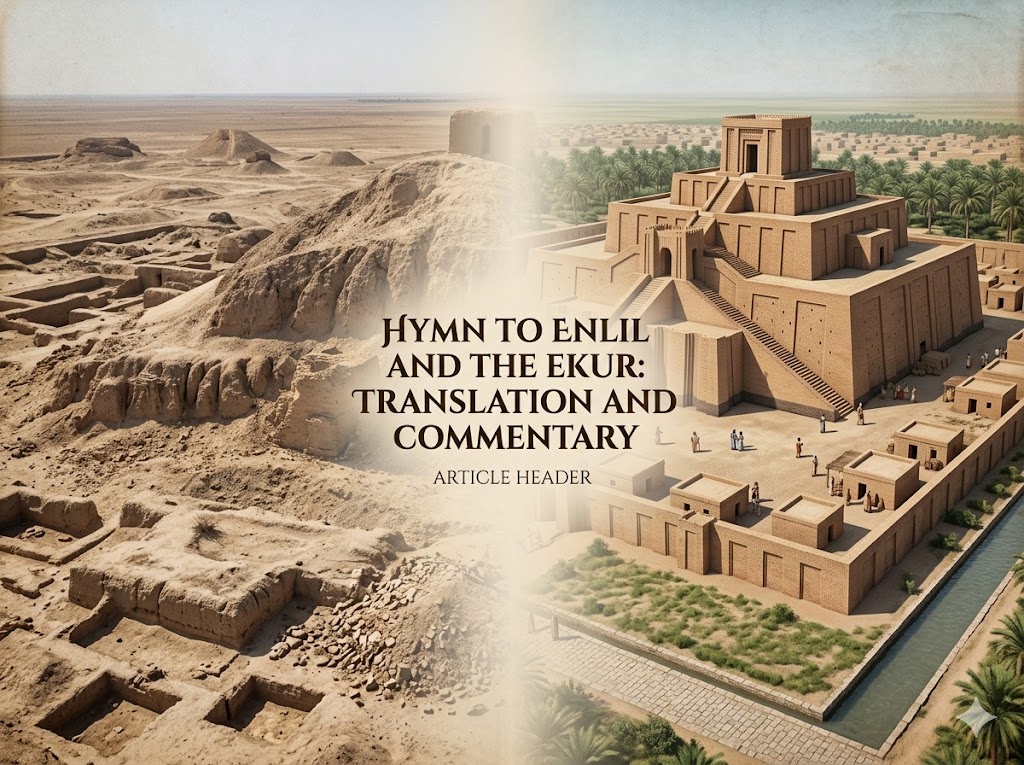
Hymn to Enlil and the Ekur. 89
- Translation. 89
- Table of Terms. 94
- Textual Analysis. 95
- Bibliography. 99
Enlil and Ninlil 103
- Translation. 104
- Table of Terms. 107
- Textual Analysis. 108
- Bibliography. 110
Hymn to the Hoe. 113
- Translation. 114
- Table of Terms. 115
- Textual Analysis. 115
- Bibliography. 118
An adab for Ninlil 121
- Translation. 122
- Table of Terms. 123
- Textual Analysis. 124
- Bibliography. 127
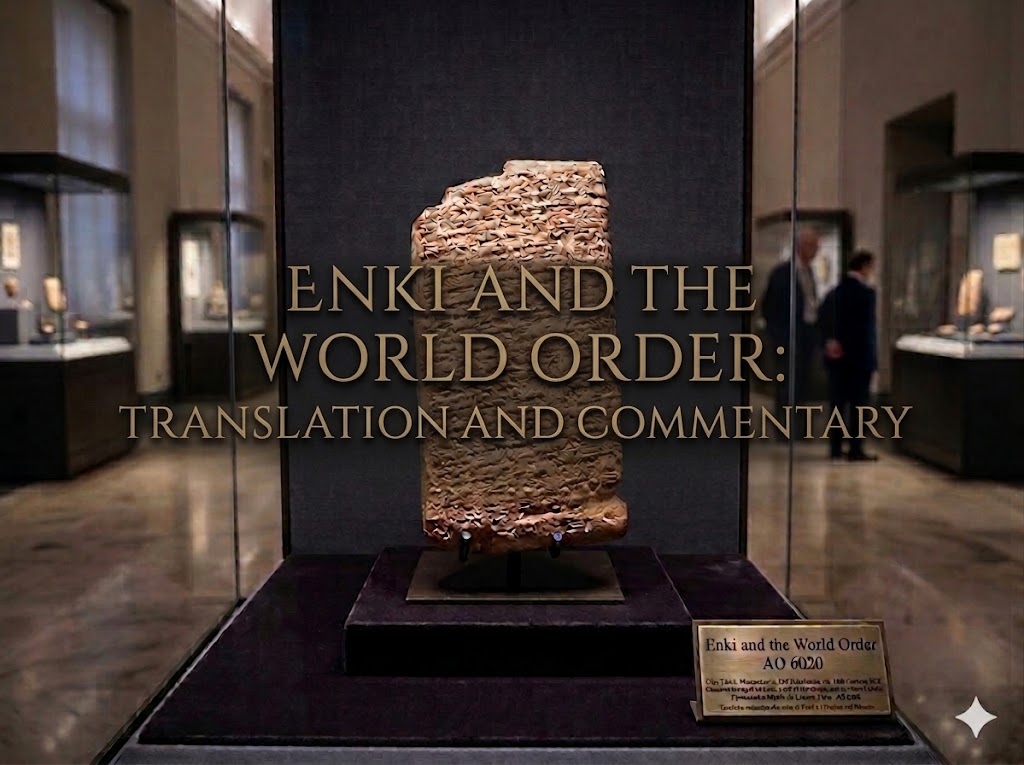
Enki and the World Order. 129
- Translation. 130
- Table of Terms. 142
- Textual Analysis. 145
- Bibliography. 150
Enki’s journey to Nibru. 153
- Translation. 155
- Table of Terms. 159
- Textual Analysis. 160
- Bibliography. 164
Enki e Ninhursaja (Ninhursag) 167
- Translation. 168
- Table of Terms. 176
- Textual Analysis. 179
- Bibliography. 182
Enki and Ninmah. 185
- Translation. 186
- Table of Terms. 191
- Textual Analysis. 192
- Bibliography. 197
Hymn to Inanna. 199
- Translation. 199
- Textual Analysis. 200
- Ribliography. 201
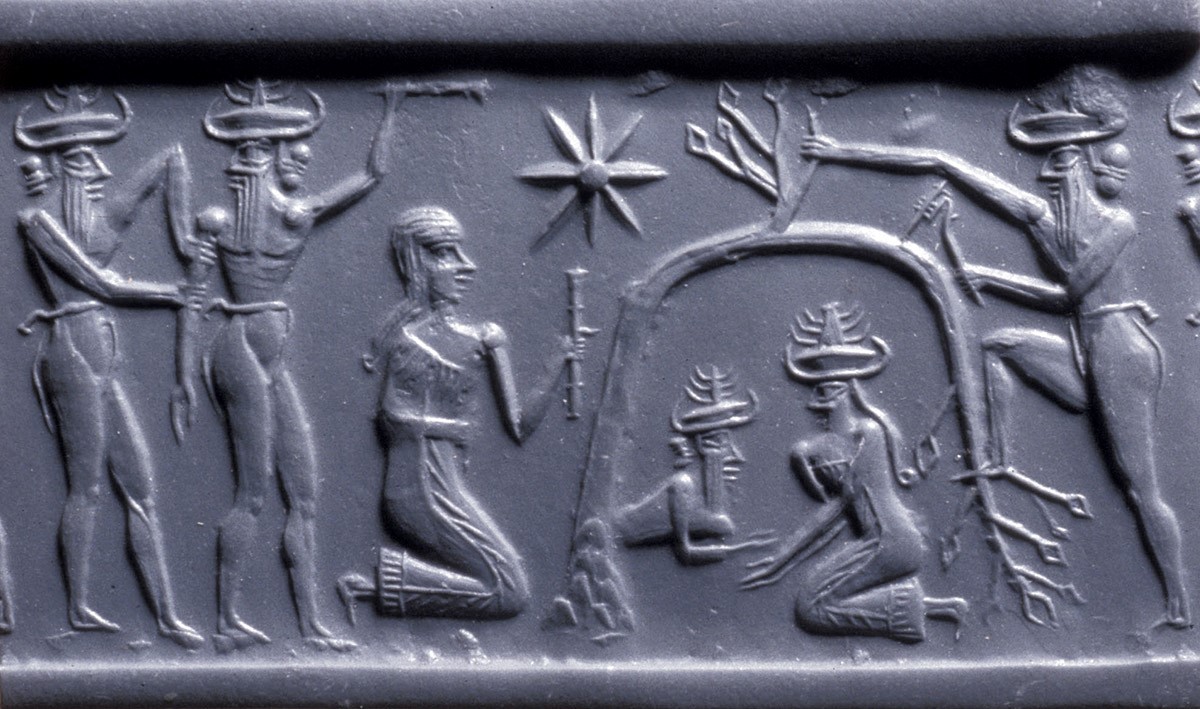
Inanna and the Huluppu Tree. 203
- Translation. 203
- Table of Terms. 207
- Textual Analysis. 208
- Bibliography. 211
Dumuzid and Enkimdu The Dispute between the Shepherd and the Farmer 213
- Translation. 214
- Table of Terms. 216
- Textual Analysis. 217
- Bibliography. 219
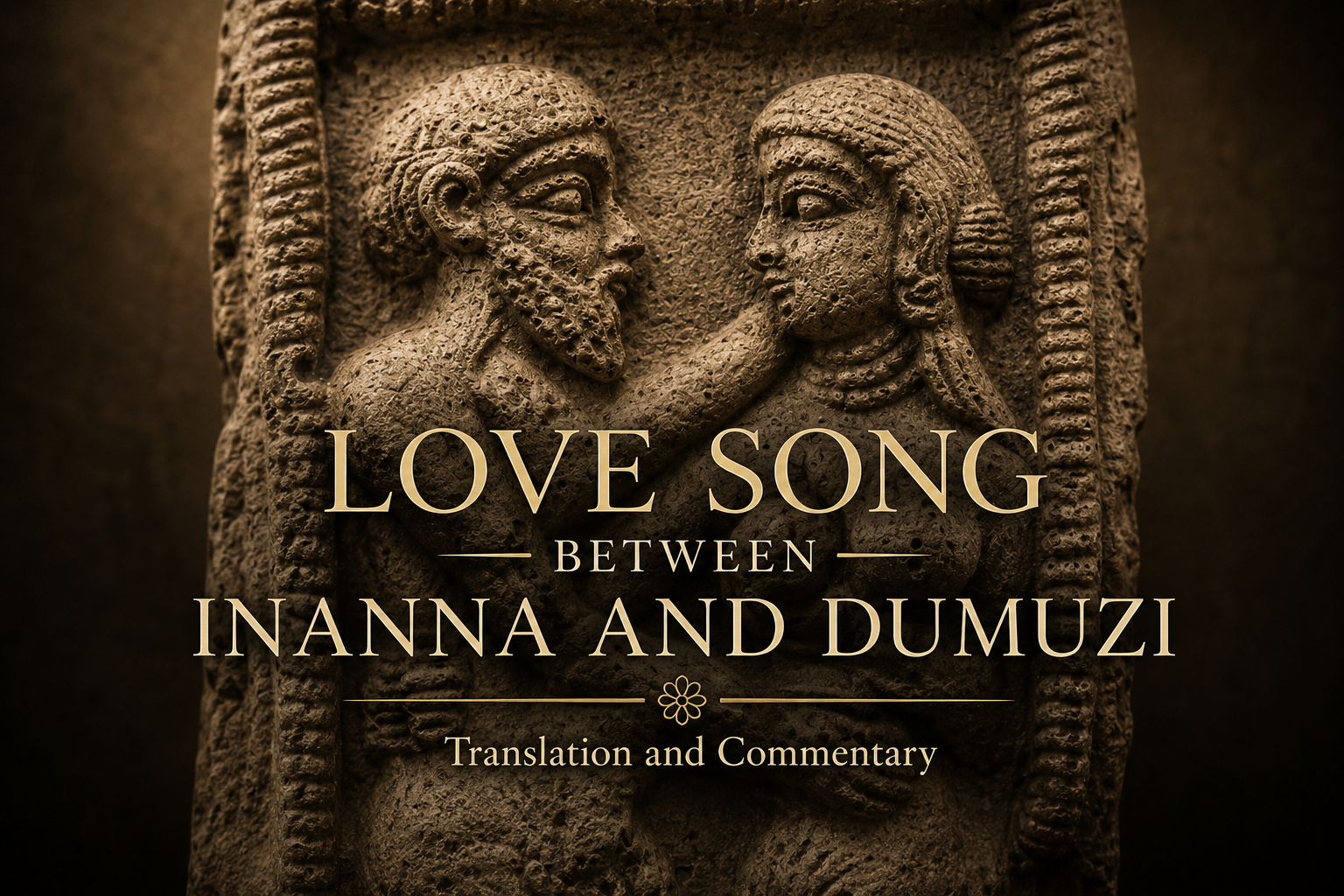
Love Song between Dumuzi and Inanna. 221
- Translation. 221
- Table of Terms. 222
- Textual Analysis. 223
- Bibliography. 225
Inana and Enki 227
- Translation. 228
- Table of Terms. 243
- Textual Analysis. 245
- Bibliography. 248
Inanna’s Descent to the Netherworld. 251
- Translation. 252
- Table of Terms. 265
- Textual Analysis. 267
- Biblioghraphy. 276
A Hymn to Nanna. 279
- Translation. 280
- Table of Terms. 283
- Textual Analysis. 284
- Bibliography. 286
Ninurta’s exploits. 289
- Translation. 290
- Table of Terms. 309
- Textual Analysis. 311
- Bibliography. 317
Ninurta’s journey to Eridug. 321
- Translation. 322
- Table of Terms. 325
- Textual Analysis. 326
- Bibliography. 329
Il mito del Diluvio. 333
- Translation. 334
- Table of Terms. 336
- Textual Analysis. 338
- Bibliography 345
Book Contents
From hymns to Enlil and Inanna to cosmogonic myths, from stories about the creation of humankind to the theme of the afterlife, there emerges a complex and surprisingly relevant worldview, founded upon a fragile balance between order and chaos, divine will and human destiny. The Sumerian gods, deeply anthropomorphic in nature, reflect the tensions, fears, and aspirations of a society that sought to understand the meaning of existence and the workings of the cosmos through the language of myth.
The volume does not merely present the texts: each translation is accompanied by a detailed analysis, glossaries of terms, and philological and historical references that allow the reader to grasp the deeper meaning of the narratives, their ritual context, and their cultural value. Writing, originally developed as an administrative tool, thus becomes a repository of the sacred, a means of preserving knowledge, and a foundation of collective identity.
This book is intended for readers who wish to approach Sumerian mythology with rigor and clarity, as well as for those who seek to rediscover, within the earliest written testimonies of humanity, the great questions that continue to challenge humankind: the origin of the world, the meaning of labor, the limits of life, and the relationship with the divine. A work that restores to Sumerian myths their most authentic nature: not merely stories of the past, but timeless instruments of knowledge.
Articles from the Book
- Allen, J. P., Middle Egyptian: An Introduction to the Language and Culture of Hieroglyphs, 2000.
- Alster, B., Dumuzi’s Dream: Aspects of Oral Poetry in a Sumerian Myth, 1975.
- Annus, A., The God Ninurta in the Mythology and Royal Ideology of Ancient Mesopotamia, 2002.
- Barton, G. A., Miscellaneous Babylonian Inscriptions, 1918.
- Black, J., Reading Sumerian Poetry, 1985.
- Black, J., The Sumerians, 1985.
- Black, J. – Cunningham, G. – Ebeling, J. – Flückiger-Hawker, E. – Robson, E. – Taylor, J. – Zólyomi, G., The Literature of Ancient Sumer, 2004.
- Black, J. – Green, A., Gods, Demons and Symbols of Ancient Mesopotamia: An Illustrated Dictionary, 1992.
- Böck, B., “Explaining the Emergence of Social Institutions in Ancient Mesopotamia: The Sumerian Myth Enki and the World Order”, 2021.
- Bottéro, J., La religione più antica: la Mesopotamia, 1989.
- Bottéro, J., La religion babylonienne, 1992.
- Bottéro, J., Mesopotamia: Writing, Reasoning, and the Gods, 1992.
- Bottéro, J., Mésopotamie. L’écriture, la raison et les dieux, 1987.
- Bottéro, J., Miti e riti di Babilonia, 1987.
- Bottéro, J., Religion in Ancient Mesopotamia, 2001.
- Charpin, D., Writing, Law, and Kingship in Old Babylonian Mesopotamia, 2012.
- Chiera, E., Sumerian Epics and Myths, 1934.
- Chiera, E., Sumerian Religious Texts, 1934.
- Civil, M., Studies in Sumerian Literature, 1987.
- Civil, M., “The Sumerian Writing System: Some Problems”, in Visible Language, XXVIII, 1994.
- Civil, M., The Early Dynastic Practical Vocabulary, 1987.
- Civil, M., The Song of the Plough and Related Texts, 1966.
- Clifford, R. J., Creation Accounts in the Ancient Near East and in the Bible, 1994.
- Coetser, P., The Cosmic Mountain in Ancient Mesopotamian Religion, 2022.
- Cooper, J. S., Sacred Marriage and Popular Cult in Early Mesopotamia, 1993.
- Dalley, S., Myths from Mesopotamia: Creation, the Flood, Gilgamesh, and Others, 1989.
- Electronic Text Corpus of Sumerian Literature (ETCSL), “An adab to Ninlil” (t.4.24.1), s.d.
- Eliade, M., Trattato di storia delle religioni, 1949.
- Falkenstein, A., Die Haupttypen der sumerischen Gottesvorstellungen, 1953.
- Falkenstein, A., Die sumerische Religion, 1966.
- Falkenstein, A., Die sumerische religiöse Literatur, 1959.
- Falkenstein, A., Sumerische religiöse Texte, 1953.
- Farber, W., Sumerian Literary Texts in the University Museum, 1973.
- Filoramo, G. – Massenzio, M., Storia delle religioni, 1998.
- Frankfort, H., Kingship and the Gods, 1948.
- Frankfort, H., Stratified Cylinder Seals from the Diyala Region, 1939.
- Frankfort, H., The Art and Architecture of the Ancient Orient, 1948.
- Freud, S., Pulsioni e loro destini, 1915.
- George, A. R., Babylonian Topographical Texts, 1992.
- George, A. R., The Babylonian Gilgamesh Epic, 2003.
- George, A. R., The Epic of Gilgamesh: A New Translation, 1999.
- Gimbutas, M., The Language of the Goddess, 1989.
- Glassner, J.-J., Mesopotamian Chronicles, 2004.
- Gordon, E. I., Sumerian Proverbs: Glimpses of Everyday Life in Ancient Mesopotamia, 1995.
- Hallo, W. W., Origins: The Ancient Near Eastern Background of Some Modern Western Institutions, 1997.
- Hallo, W. W., The Context of Scripture, 1997.
- Hallo, W. W., The World’s Oldest Literature, 2010.
- Hallo, W. W. – Simpson, W. K., The Ancient Near East: A History, 1998.
- Hallo, W. W. – van Dijk, J. J. A., The Exaltation of Inanna, 1968.
- Horowitz, W., Mesopotamian Cosmic Geography, 1998.
- Jacobsen, T., “Primitive Democracy in Ancient Mesopotamia”, 1943.
- Jacobsen, T., The Harps that Once… Sumerian Poetry in Translation, 1987.
- Jacobsen, T., The Treasures of Darkness: A History of Mesopotamian Religion, 1976.
- Katz, D., The Image of the Netherworld in the Sumerian Sources, 2003.
- Klein, J., Studies in Sumerian Hymns, 1997.
- Klein, J., The Royal Hymns of Šulgi King of Ur, 1990.
- Klein, J., “Sumerian Literature: Recovery and Restoration”, in Journal of the American Oriental Society, 110, 1990.
- Kramer, S. N., Enki and Ninhursag: A Sumerian “Paradise” Myth, 1981.
- Kramer, S. N., History Begins at Sumer, 1981.
- Kramer, S. N., Sumerian Mythology: A Study of Spiritual and Literary Achievement in the Third Millennium B.C., 1961.
- Kramer, S. N., The Sacred Marriage Rite: Aspects of Faith, Myth and Ritual, 1969.
- Kramer, S. N., The Sumerians: Their History, Culture, and Character, 1963.
- Kramer, S. N. – Maier, J., Myths of Enki, the Crafty God, 1989.
- Lambert, W. G., Babylonian Creation Myths, 2013.
- Legrain, L., The Temple of the Sun at Sippar, 1913.
- Leick, G., A Dictionary of Ancient Near Eastern Architecture, 1998.
- Leick, G., A Dictionary of Ancient Near Eastern Mythology, 1991.
- Leick, G., Mesopotamia: The Invention of the City, 2013.
- Liverani, M., Antico Oriente: storia, società, economia, 2004.
- Liverani, M., La regalità nell’antico Vicino Oriente, 1998.
- Liverani, M., Uruk: La prima città, 2016.
- Livingstone, A., Mystical and Mythological Explanatory Works of Assyrian and Babylonian Scholars, 1986.
- Lutz, H. F., Selected Sumerian and Babylonian Texts, 1919.
- Mellaart, J., Çatal Hüyük: A Neolithic Town in Anatolia, 1967.
- Michalowski, P., “Charisma and Control: On Continuity and Change in Early Mesopotamian Bureaucratic Systems”, 1989.
- Michalowski, P., Letters from Early Mesopotamia, 1993.
- Michalowski, P., Literary and Scholastic Texts of the Old Babylonian Period, 1993.
- Michalowski, P., “Memory and Deed: The Historiography of the Political Expansion of the Akkad State”, 1989.
- Michalowski, P., The Lamentation over the Destruction of Sumer and Ur, 1989.
- Oppenheim, A. L., Ancient Mesopotamia: Portrait of a Dead Civilization, 1977.
- Pettinato, G., I Sumeri, 1994.
- Pettinato, G., Mitologia sumera, 1993.
- Postgate, J. N., Early Mesopotamia: Society and Economy at the Dawn of History, 1992.
- Potts, D. T., “Patterns of Trade in Third-Millennium BC Mesopotamia”, 1993.
- Potts, D. T., “The Road to Meluhha”, 1982.
- Reisman, D., The Nitocris “Tradition”, 1977.
- Robson, E., Mathematics in Ancient Iraq: A Social History, 2008.
- Romer, J., Testi e traduzioni su cosmogonie del Vicino Oriente, 1993.
- Roth, M. T., Law Collections from Mesopotamia and Asia Minor, 1995.
- Sachs, A. J., Astronomical Diaries and Related Texts from Babylonia, 1974.
- Sallaberger, W., Der kultische Kalender der Ur-III-Zeit, 1999.
- Smith, M. S., The Origins of Biblical Monotheism, 2001.
- Steinkeller, P., The Divine Ruler in Mesopotamia, 2013.
- Tigay, J. H., The Evolution of the Gilgamesh Epic, 1982.
- Tinney, S., Texts, Tablets and Teaching: Scribal Education in Ancient Mesopotamia, 1999.
- Tinney, S., Texts, Tablets and Teaching: Essays in Honour of William W. Hallo, 1996.
- University of Oxford, Electronic Text Corpus of Sumerian Literature (ETCSL): “Dumuzi and Enkimdu (Inanna Prefers the Farmer)”, s.d.
- Van de Mieroop, M., A History of the Ancient Near East, 2004.
- Van de Mieroop, M., A History of the Ancient Near East ca. 3000–323 BC, 2007.
- Van de Mieroop, M., King Hammurabi of Babylon: A Biography, 2005.
- Van Dijk, J., La sagesse sumérienne, 1983.
- Van Dijk, J., Lugal ud me-lám-bi nir-ĝál, 1983.
- Vanstiphout, H. L. J., Epics of Sumerian Kings. The Matter of Aratta, 1997.
- Vanstiphout, H. L. J., Sumerian Disputation Poems, 1990.
- Veldhuis, N., History of the Cuneiform Lexical Tradition, 2014.
- Veldhuis, N., Religion, Literature, and Scholarship, 2004.
- Verderame, L., La cultura dell’aldilà in Mesopotamia, 2014.
- Verderame, L., Letterature dell’antica Mesopotamia, 2017.
- Westenholz, J., Legends of the Kings of Akkade: The Texts, 1997.
- Westenholz, J. G., Legitimation of Authority through Myth and Ritual, 1997.
- Wiggermann, F. A. M., Mesopotamian Protective Spirits, 1997.
- Wiggermann, F., Mesopotamian Protective Spirits: The Ritual Texts, 1992.
- Wilkinson, R. H., The Complete Gods and Goddesses of Ancient Egypt, 2003.
- Wolkstein, D. – Kramer, S. N., Inanna: Queen of Heaven and Earth, 1983.
- Woolley, C. L., Ur Excavations, 1934.

Comments (0)