


È disponibile il nuovo libro di Manuel Bonoli, autore del sito civiltaeterne.it, intitolato La civiltà dei Sumeri – storia, mitologia e letteratura.
Il volume propone un viaggio approfondito nel mondo della più antica civiltà della storia, tra archeologia, religione, miti e testi letterari della Mesopotamia. Attraverso l’analisi delle fonti antiche e delle tavolette cuneiformi, il libro esplora la nascita delle prime città, il pantheon degli dèi sumeri e le grandi narrazioni epiche, tra cui l’Epopea di Gilgamesh e il mito del Diluvio.
Di seguito è possibile consultare l’indice completo del libro e leggere la descrizione presente nel retro di copertina, che presenta i contenuti e il percorso del volume.
Indice
- Introduzione. 11
LA STORIA INIZIA A SUMER.. 17
- L’origine dei Sumeri: teorie, evidenze e dibattiti 17
- La città urbanizzata. 22
- Il Tempio: cuore della città e dimora del dio. 25
- Le principali città sumere. 29
- Eridug (Eridu) – la culla degli dèi 30
- Unug (Uruk) – la prima città urbanizzata. 32
- Urim (Ur) – la città dei re. 38
- Lagaš (Lagash) – la città delle leggi 44
- Kiš (Kish) – la porta della regalità. 47
- Nibru (Nippur) – il cuore religioso. 48
- Šuruppak (Shuruppak) – la città del diluvio. 53
- Udaba (Adab) – la città della dea madre. 55
- Umma (Umma) – la rivale di Lagash. 56
- Larak (Larsa) – la città del Sole. 57
- Zimbir (Sippar) – il faro della giustizia. 57
- Išīn (Isin) – il regno della continuità. 59
- Le città semitiche e accadiche. 61
- L’organizzazione sociale dei sumeri 63
- L’invenzione della scrittura. 65
- 📜 Enmerkar e il Signore di Aratta. 69
- La trasformazione della materia e l’artigianato. 78
- 📜 Tenzone tra pecora e grano. 80
- Il concetto di regalità nel mondo sumero. 85
- 📜 La lista reale sumerica. 87
- Cronologia storica. 105
- Periodo di Ubaid (ca. 5000-4000 a.C.) – Prime comunità agricole e villaggi 107
- Periodo di Uruk (ca. 4000-3100 a.C.) – Nascita delle prime città. 108
- Periodo protodinastico I (ca. 2900-2750 a.C.) 109
- Periodo protodinastico II (ca. 2750-2600 a.C.) 111
- Periodo Protodinastico III (ca. 2494-2335 a.C.) — Dinastia di Lagash. 114
- Impero accadico (ca. 2335- 2193 a.C.) 117
- L’invasione dei Gutei (2193-2123 a.C.) 119
- La III Dinastia di Ur e la rinascita neo-sumera (ca. 2113-2029 a.C.) 121
- La fine definitiva della civiltà sumera. 122
MITOLOGIA SUMERA.. 125
- Principi della religione sumera. 125
- Cosmogonia e Pantheon sumero. 133
- An, il padre degli Dei 143
- Enlil, il capo del pantheon sumerico. 144
- 📜 Inno a Enlil 146
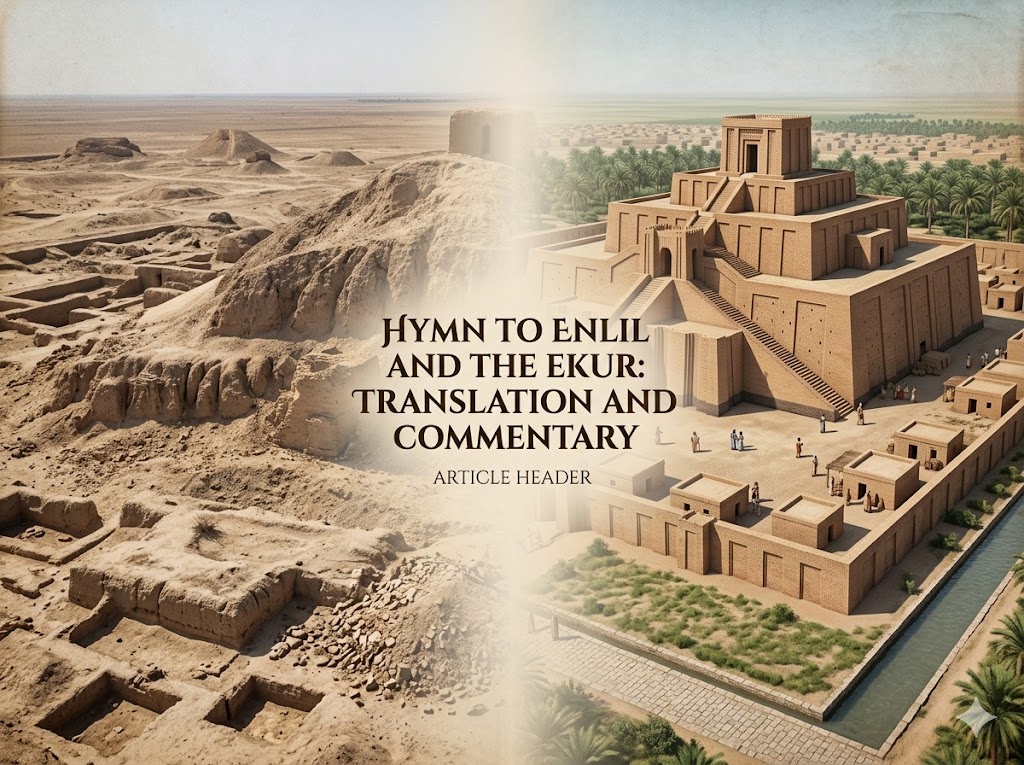
- 📜 Inno a Enlil e all’Ekur. 154
- Enki, il protettore dell’umanità. 159
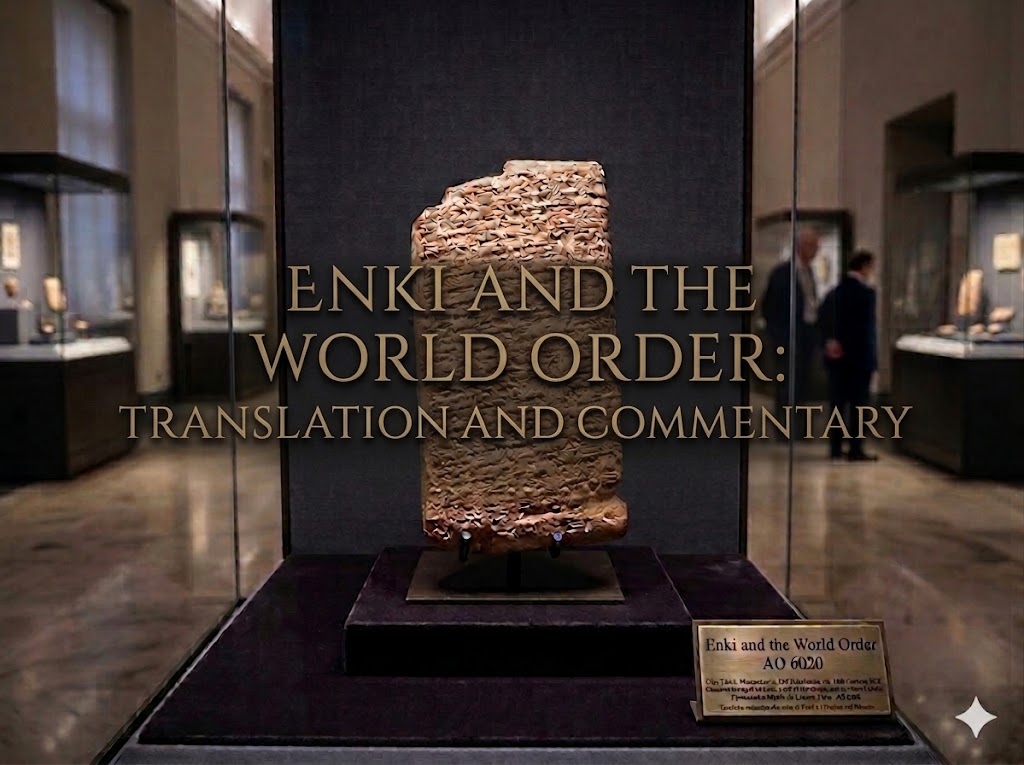
- 📜 Enki e l’ordine del mondo. 161
- Ninhursag, l’archetipo della Dea Madre: continuità simboliche tra la preistoria e il mondo sumero 180
- Inanna, la divinità femminile più importante del pantheon sumero 182
- 📜 Discesa di Inanna agli inferi 185
- 📜 Il mito i Inanna e l’albero huluppu. 214
- 📜 Inno a Inanna. 220
- Dumuzi: il dio della vegetazione, della fertilità e dei cicli stagionali nella religione sumeri 222
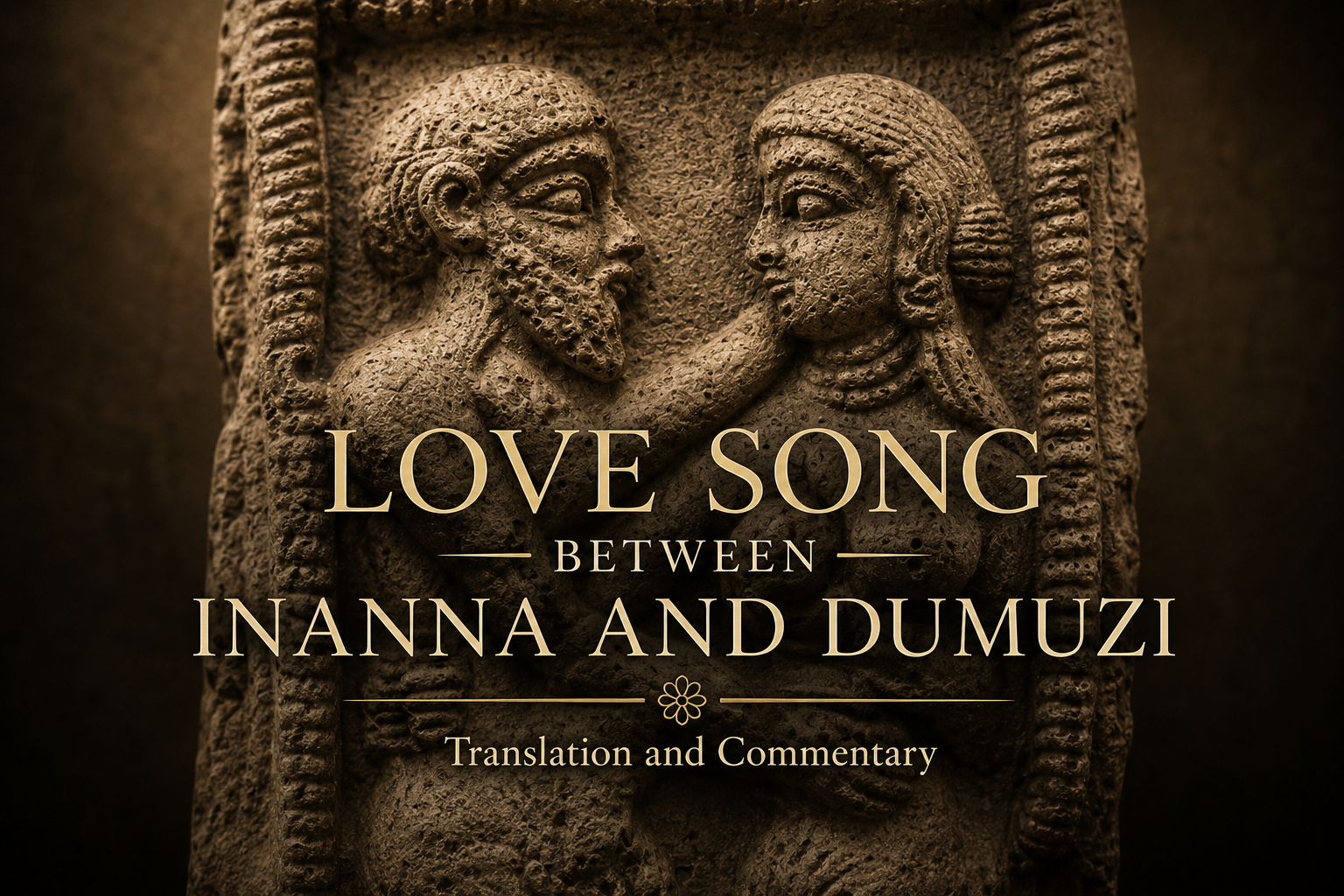
- 📜 Matrimonio sacro tra Dumuzi e Inanna. 224
- Utu, il dio Sole. 231
- 📜 Inno a Utu. 233
- Nanna, il dio lunare di Ur. 236
- Ereshkigal: la Regina del Mondo Infero. 238
- Nammu: la dea primordiale delle acque e madre degli dèi 240
- La creazione dell’uomo. 243
- 📜 Il mito di Enki e Ninmah. 245
- 📜 Inno alla zappa. 252
- Dilmun: il paradiso primordiale dei Sumeri 256
- L’aldilà. 258
- Il diluvio. 259
- 📜 Il mito di Ziusudra – l’epica sumera del Diluvio. 262
- 📜 Il mito di Atrahasis – L’epica accadica del Diluvio e la creazione dell’umanità 267
- 📜 Dal Diluvio di Atraḫasis al Diluvio di Noè: l’eredità mesopotamica nella Genesi biblica 283
GILGAMESH TRA MITO E REALTA’ 289
- Gilgamesh, il leggendario re di Uruk. 289
- Gilgamesh, eroe epico. 293
- Epopea di Gilgamesh – Narrazione in prosa. 294
- 📜 Tavola I. 295
- 📜 Tavola II. 297
- 📜 Tavola III. 301
- 📜 Tavola IV.. 303
- 📜 Tavola V.. 306
- 📜 Tavola VI. 307
- 📜 Tavola VII. 308
- 📜 Tavola VIII. 311
- 📜 Tavola IX.. 313
- 📜 Tavola X.. 315
- 📜 Tavola XI. 318
- La Morte di Gilgamesh. 324
- 📜 Estratto da “Il sogno di Gilgamesh”. 325
- Interpretazione del poema. 331
- Il viaggio come cammino spirituale e trasformazione del re. 335
- La morte e l’impossibile superamento. 337
- Epopea di Gilgamesh – Narrazione in prosa. 294
Bibliografia. 341

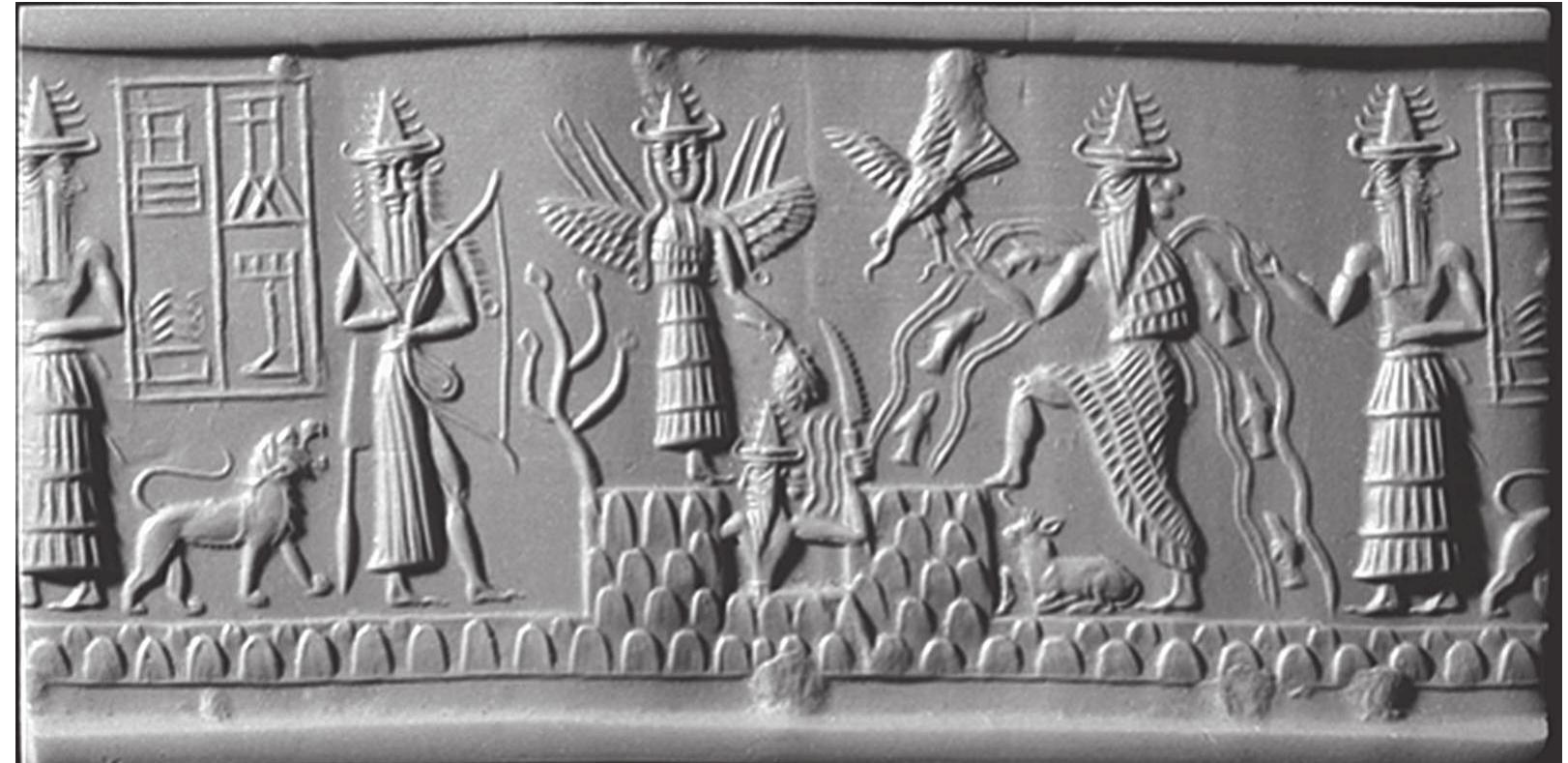
Descrizione
Tra le sabbie della Mesopotamia, là dove i fiumi Tigri ed Eufrate scorrono e si intrecciano, nacque la prima grande civiltà della storia: quella dei Sumeri. In quelle terre antichissime sorsero città come Eridu, Uruk, Ur e Nippur, centri di cultura e spiritualità nei quali prese forma uno dei patrimoni più straordinari dell’umanità.
La civiltà sumera non ci ha lasciato soltanto templi, rovine e reperti archeologici. Ci ha consegnato soprattutto una voce: quella delle tavolette d’argilla incise in caratteri cuneiformi, che hanno attraversato i millenni conservando miti, poemi, inni religiosi e riflessioni profonde sull’origine della vita e sul destino dell’uomo. In quei segni impressi nell’argilla si incontrano la storia e il mito, la memoria e la teologia, la poesia e il pensiero filosofico.
Nel libro La civiltà dei Sumeri – storia, mitologia e letteratura, Manuel Bonoli accompagna il lettore in un viaggio affascinante nel cuore di questo mondo antico. Attraverso un percorso che unisce archeologia, storia e interpretazione simbolica dei testi, il volume ricostruisce l’universo spirituale dei Sumeri, mostrando come la loro letteratura rappresenti uno dei primi grandi tentativi dell’umanità di comprendere il cosmo e la propria esistenza.
Particolare attenzione è dedicata alle grandi figure del mito sumero: gli dèi Enlil, Inanna ed Enki, protagonisti dei canti e degli inni religiosi, e i sovrani leggendari come Enmerkar e soprattutto Gilgamesh. Proprio Gilgamesh, re della città di Uruk, emerge come una delle figure più straordinarie della letteratura antica. La sua epopea, tra le più antiche mai scritte, non è soltanto il racconto delle imprese di un eroe, ma una meditazione profonda sulla mortalità umana, sull’amicizia e sul desiderio di immortalità.
Attraverso la sua storia, i Sumeri formularono una delle domande più universali della condizione umana: cosa significa essere uomini di fronte all’eterno?
Il libro esplora inoltre il mito del Diluvio, sorprendente antecedente delle tradizioni bibliche, e il complesso pantheon delle divinità mesopotamiche, ricostruendo le relazioni tra gli dèi e il loro ruolo nella visione cosmica dei Sumeri.
Ricco di riferimenti archeologici, epigrafici e letterari, La civiltà dei Sumeri – storia, mitologia e letteratura è allo stesso tempo un saggio storico e una riflessione sull’origine della conoscenza. Attraverso le parole incise sulle tavolette d’argilla, il lettore scopre come nel cuore del passato più remoto risuoni già la voce dell’uomo moderno: quella che, interrogando il tempo e gli dèi, cerca da sempre di comprendere sé stessa.
Alcuni articoli tratti dal libro
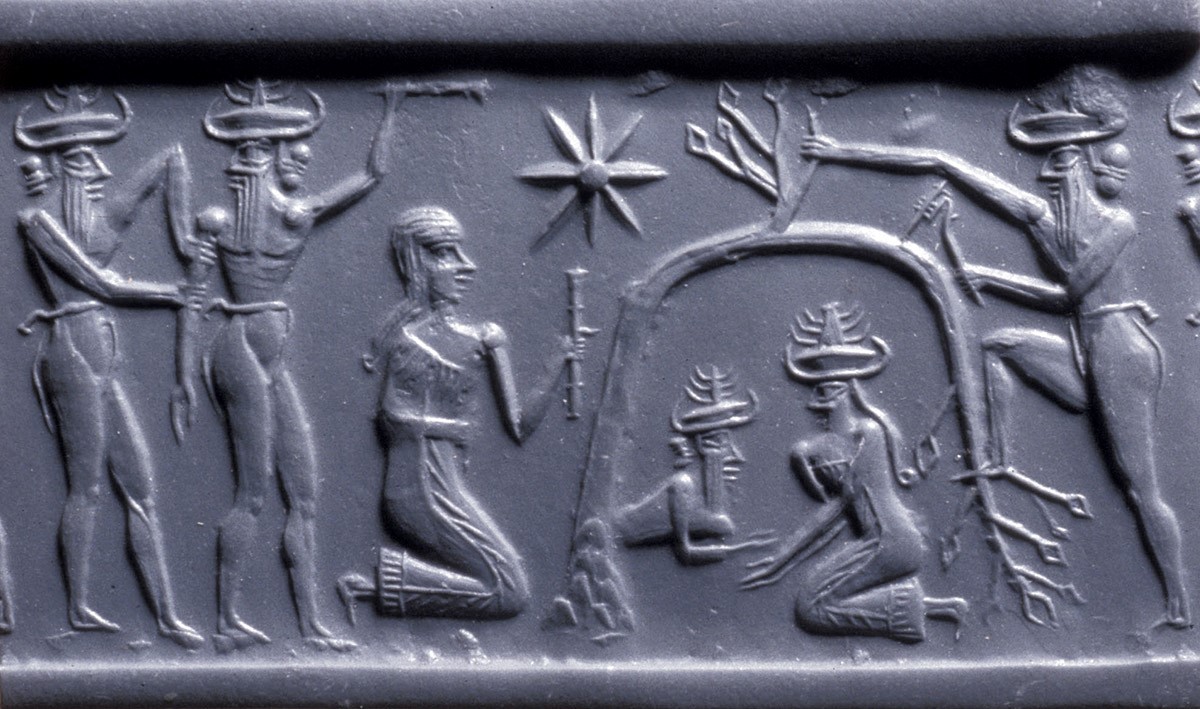
IL SIGILLO CILINDRICO BM 89115 (sigillo di Adda): utilizzo e significato simbolico
NIPPUR LA “GERUSALEMME” DEI SUMERI. Descrizione e foto d’epoca restaurate
I tesori della tomba della regina Pu-abi a Ur: capolavori dell’arte sumerica
LO STENDARDO DI UR: simbolo di potere, arte e regalità nella Mesopotamia sumerica
Elenco fonti bibliografiche
- Adams, R. McC. (1981). Land Behind Baghdad: A History of Settlement on the Diyala Plains. University of Chicago Press.
• Adams, R. McC. (1981). Heartland of Cities: Surveys of Ancient Settlement and Land Use on the Central Floodplain of the Euphrates. University of Chicago Press. - Akkermans, P.; Schwartz, G. (2003). The Archaeology of Syria. Cambridge University Press.
- Algaze, G. (1993). The Uruk World System: The Dynamics of Expansion of Early Mesopotamian Civilization. University of Chicago Press.
• Algaze, G. (1993). “The Uruk Expansion: Cross-cultural Exchange in Early Mesopotamia.”
• Algaze, G. (2005). Ancient Mesopotamia at the Dawn of Civilization: The Evolution of an Urban Landscape. University of Chicago Press. - Allen, J. P. (2000). Middle Egyptian: An Introduction to the Language and Culture of Hieroglyphs. Cambridge University Press.
- Al-Zahery, N. et al. (2011). “Genetic Structure of Marsh Arabs of Iraq.”
- Assmann, J. (1992). Das kulturelle Gedächtnis. Schrift, Erinnerung und politische Identität in frühen Hochkulturen. C. H. Beck.
- Baadsgaard, A. (2011). “Human Sacrifice and Intentional Corpse Preservation in the Royal Cemetery of Ur.”
- Bar-Yosef, O. (2001). “From Sedentary Foragers to Village Hierarchies: The Emergence of Social Institutions.”
- Bellwood, P. (2005). First Farmers: The Origins of Agricultural Societies. Blackwell.
- Black, J.; Green, A. (1992). Gods, Demons and Symbols of Ancient Mesopotamia: An Illustrated Dictionary. British Museum Press.
- Black, J.; Cunningham, G.; Robson, E.; Zólyomi, G. (2004). The Literature of Ancient Sumer. Oxford University Press.
- Black, J.; George, A.; Postgate, J. (2004). A Concise Dictionary of Akkadian. Harrassowitz.
- Bottéro, J. (1987). La plus vieille religion: En Mésopotamie.
• Bottéro, J. (1987). La religione babilonese. Milano: Jaca Book.
• Bottéro, J. (1989). La religion mésopotamienne. Paris: PUF.
• Bottéro, J. (1992). La religion babylonienne. Paris: PUF.
• Bottéro, J. (2001). La religione babilonese. Torino: Einaudi. - Braudel, F. (1979). The Structures of Everyday Life: Civilization and Capitalism, 15th–18th Century.
• Braudel, F. (1998/2016). Memorie del Mediterraneo. Bompiani. - Carter, R.; Philip, G. (a cura di) (2010). Beyond the Ubaid: Transformation and Integration in the Late Prehistoric Societies of the Middle East. University of Chicago Press.
- Cauvin, J. (2000). The Birth of the Gods and the Origins of Agriculture. Cambridge University Press.
• Cauvin, J. (2010/2016). Nascita delle divinità. Nascita dell’agricoltura. La rivoluzione dei simboli nel Neolitico. Bollati Boringhieri. - Childe, V. G. (1936). Man Makes Himself. Watts & Co.
• Childe, V. G. (1950). “The Urban Revolution.” Town Planning Review, 21(1). - Civil, M. (1995). Ancient Mesopotamian Education. Groningen.
• Civil, M. (2010). The Sumerian Lexicon. Chicago. - Cooper, J. S. (1983). Reconstructing History from Ancient Inscriptions: The Lagash-Umma Border Conflict. Undena.
• Cooper, J. S. (1983). Sumerian and Akkadian Kingship.
• Cooper, J. S. (1983). Sumerian and Akkadian Legal Texts. Yale University Press.
• Cooper, J. S. (1983). “Mesopotamian Administration and Irrigation.”
• Cooper, J. S. (1983). Sumerian and Akkadian Texts on Economic and Social Life.
• Cooper, J. S. (1986). Sumerian and Akkadian Royal Inscriptions: Presargonic Inscriptions.
• Cooper, J. S. (2004). “Babylonian Beginnings: The Origin of the Cuneiform Writing System in Comparative Perspective.” - Crawford, H. (2004). Sumer and the Sumerians (2ª ed.). Cambridge University Press.
• Crawford, H. (2013). The Sumerian World. Routledge. - Dalley, S. (1989). Myths from Mesopotamia: Creation, the Flood, Gilgamesh, and Others. Oxford University Press.
• Dalley, S. (2000). Myths from Mesopotamia: Creation, the Flood, Gilgamesh and Others. Oxford University Press. - Damerow, P.; Englund, R. K.; Nissen, H. J. (1993). Archaic Bookkeeping: Writing and Techniques of Economic Administration in the Ancient Near East. University of Chicago Press.
- De Sarzec, E. (1884). Découvertes en Chaldée.
- Derrida, J. (1967). De la grammatologie. Éditions de Minuit.
- Dietrich, O.; Heun, M.; Notroff, J.; Schmidt, K.; Zarnkow, M. (2012). “The Role of Cult and Feasting in the Emergence of Neolithic Communities.” Antiquity, 86(333), 674–695.
- Edzard, D. O. (1967). Die “Stele der Geier” und die Kultur der Frühdynastischen Zeit.
• Edzard, D. O. (1997). Gudea and His Dynasty. University of Toronto Press.
• Edzard, D. O. (2003). History of Mesopotamia: The Sumerians. University of Toronto Press. - Eliade, M. (1963). Mito e realtà. Torino: Boringhieri.
• Eliade, M. (1976). Trattato di storia delle religioni. Torino: Bollati Boringhieri. - Englund, R. K. (1998). “Mesopotamian Writing: Cuneiform Origins and Development.”
• Englund, R. K. (1998). Texts from the Late Uruk Period. Berlin. - Falkenstein, A. (1952). Sumerische Inschriften der Könige von Nippur.
- Filoramo, G.; Massenzio, M. (1998). Storia delle religioni. L’età antica. Laterza.
- Finkel, I. L. (2015). The Royal Game of Ur. British Museum Press.
- Foster, B. (2005). Before the Muses: An Anthology of Akkadian Literature.
- Frangipane, M. (2001). La nascita dello Stato nel Vicino Oriente. Laterza.
• Frangipane, M. (2007). “Different Types of Evolutionary Processes in the Formative Stages of the State in the Near East.” World Archaeology.
• Frangipane, M. (2007). Origini della civiltà: Le prime società complesse del Vicino Oriente. Laterza.
• Frangipane, M. (2007). From Village to City in the Ancient Near East. Le Lettere. - Frankfort, H. (1954). The Art and Architecture of the Ancient Orient. Penguin.
• Frankfort, H. (1994). Il pensiero religioso dell’antico Egitto e della Mesopotamia. Einaudi.
• Frankfort, H.; Lloyd, S.; Safar, F. (1946/1949). Eridu. Iraq Directorate of Antiquities. - Frayne, D. (2008). Presargonic Period (2700–2350 BC): Early Periods, Volume 1. University of Toronto Press.
- Freud, S. (1915). Introduzione alla psicoanalisi.
- George, A. R. (1999). The Epic of Gilgamesh. Penguin.
• George, A. R. (2003). The Epic of Gilgamesh: A New Translation.
• George, A. R. (2003). The Babylonian Gilgamesh Epic: Introduction, Critical Edition and Cuneiform Texts. Oxford University Press.
• George, A. R. (2003). The Epic of Gilgamesh: The Babylonian Epic Poem and Other Texts in Akkadian and Sumerian. - Glassner, J.-J. (2003/2004). Mesopotamian Chronicles. Brill / SBL.
• Glassner, J.-J. (2003). The Invention of Cuneiform: Writing in Sumerian Civilization. Johns Hopkins University Press. - Goody, J. (1977). The Domestication of the Savage Mind. Cambridge University Press.
• Goody, J. (1987). The Interface Between the Written and the Oral. Cambridge University Press. - Hager, L. (2014). The Royal Tombs of Ur Reconsidered.
- Hallo, W. W. (1951). “The Cultic Ziggurat and the Sumerian Sacred Marriage.”
• Hallo, W. W. (1971). The Ancient Near East: A History.
• Hallo, W. W. (1971). “The Origins of the Sumerian King List.” JCS, 21, 63–77.
• Hallo, W. W. (1976). The Birth of Kingship: The Early History of Sumer and Akkad. Yale University Press.
• Hallo, W. W. (1976). The Ur III Dynasty: Administrative and Legal Texts.
• Hallo, W. W. (1976). “The Context of the Ur-Nammu Code.”
• Hallo, W. W. (1996/1997). Origins: The Ancient Near Eastern Background of Some Modern Western Institutions. Brill.
• Hallo, W. W. (1997). The Origins of Writing. University of Washington Press.
• Hallo, W. W. (2010). The World’s Oldest Literature: Studies in Sumerian Belles-Lettres. Brill. - Hallo, W. W.; Simpson, W. K. (1998). The Ancient Near East: A History. Harcourt.
- Hallo, W. W.; van Dijk, J. J. A. (1968). The Exaltation of Inanna. Yale University Press.
- Hansen, D. P. (1998). Art of the Royal Tombs of Ur. University of Pennsylvania Museum.
- Hornung, E. (2006). The Ancient Egyptian Books of the Afterlife.
• Hornung, E.; Krauss, R.; Warburton, D. (2006). Ancient Egyptian Chronology. Brill. - Horowitz, W. (1990). Mesopotamian Cosmic Geography. Eisenbrauns.
- Huot, J.-L. (1996). L’urbanisation de la Mésopotamie: Actes du Colloque di Lyon. Éditions du CNRS.
- Jacobsen, T. (1939). The Sumerian King List. University of Chicago Press.
• Jacobsen, T. (1957). “Early Political Development in Mesopotamia.” Zeitschrift für Assyriologie, 52.
• Jacobsen, T. (1970). Toward the Image of Tammuz and Other Essays on Mesopotamian History and Culture. Harvard University Press.
• Jacobsen, T. (1976). The Treasures of Darkness: A History of Mesopotamian Religion. Yale University Press.
• Jacobsen, T.; Adams, R. McC. (1958). “Salt and Silt in Ancient Mesopotamian Agriculture.” Science, 128, 1251–1258. - Jung, C. G. (1952). Simboli della trasformazione. Torino.
- Katz, D. (2003). The Image of the Netherworld in the Sumerian Sources. CDL Press.
- Kelly, R. L. (2013). The Foraging Spectrum: Diversity in Hunter-Gatherer Lifeways.
- Klein, J. (1992). “Gilgamesh and the Mesopotamian Epic Tradition.”
• Klein, J. (1997). “Enmerkar and the Lord of Aratta.” In The Context of Scripture, ed. W. W. Hallo. Brill. - Kovacs, M. G. (1989). The Epic of Gilgamesh. Stanford University Press.
- Kramer, S. N. (1944). Sumerian Mythology: A Study of Spiritual and Literary Achievement in the Third Millennium B.C.
• Kramer, S. N. (1961). History Begins at Sumer: Thirty-Nine Firsts in Recorded History. University of Pennsylvania Press.
• Kramer, S. N. (1961). Sumerian Mythology (rev. ed.). University of Pennsylvania Press.
• Kramer, S. N. (1963). Sumerian Literature: Selected Translations. Harper & Row.
• Kramer, S. N. (1963). The Sumerians: Their History, Culture, and Character. University of Chicago Press.
• Kramer, S. N. (1969). Lamentation over the Destruction of Nippur.
• Kramer, S. N. (1969). The Sacred Marriage Rite: Aspects of Faith, Myth, and Ritual in Ancient Sumer. Indiana University Press.
• Kramer, S. N. (1969). The Death of Dumuzi: A Study in Ancient Near Eastern Mythology.
• Kramer, S. N.; Maier, J. (1989). Myths of Enki, the Crafty God. Oxford University Press. - Lambert, W. G. (2013). Babylonian Creation Myths. Eisenbrauns.
• Lambert, W. G. (2013). Mesopotamian God Lists. Oxford.
• Lambert, W. G.; Millard, A. R. (1969). Atra-Hasis: The Babylonian Story of the Flood. Oxford University Press. - Leick, G. (1998). A Dictionary of Ancient Near Eastern Mythology. Routledge.
• Leick, G. (2001/2002). Mesopotamia: The Invention of the City. Penguin.
• Leick, G. (2013). Historical Dictionary of Mesopotamia. Scarecrow Press. - Liverani, M. (1993). Antico Oriente: Storia, società, economia. Laterza.
• Liverani, M. (2003). Oltre la Bibbia: Storia antica di Israele. Laterza.
• Liverani, M. (2011). Antico Oriente: Storia, società, economia. Laterza.
• Liverani, M. (2011). The Ancient Near East: History, Society and Economy. Routledge.
• Liverani, M. (2014). Antico Oriente: Storia, società, economia. Laterza.
• Liverani, M. (2014). La civiltà sumera. Carocci.
• Liverani, M. (2014). Le civiltà del Vicino Oriente antico. Laterza. - Livingstone, A. (1986). Mystical and Mythological Explanatory Works of Assyrian and Babylonian Scholars.
- Maekawa, K. (1973). “The Administrative Texts from the Time of the Lagaš Dynasty.” Mesopotamia, 8, 1–48.
- Marchesi, G.; Marchetti, N. (2006). Royal Statuary of Early Dynastic Mesopotamia. Eisenbrauns.
- Matthews, R. (2003). The Archaeology of Mesopotamia: Theories and Approaches. Routledge.
- Michalowski, P. (1983). “The Sumerian King List and the Early History of Mesopotamia.”
• Michalowski, P. (1983). “History as Charter: Some Observations on the Sumerian King List.” JAOS, 103(1), 237–248.
• Michalowski, P. (1990). “Early Mesopotamian Communicative Systems.” World Archaeology, 21(3).
• Michalowski, P. (1993). “Charisma and Control: On Continuity and Change in Early Mesopotamian Bureaucratic Systems.” - Miglus, P. A. (1999). Stadt und Haus im alten Mesopotamien. Philipp von Zabern.
- Moorey, P. R. S. (1977). Excavations at Ur: Art from the Royal Tombs. British Museum Press.
- Nissen, H. J. (1988). The Early History of the Ancient Near East, 9000–2000 B.C. University of Chicago Press.
• Nissen, H. J. (2002). Uruk: Early Urban Civilisation in Mesopotamia. British Museum Press.
• Nissen, H. J.; Damerow, P.; Englund, R. K. (1993). Archaic Bookkeeping: Early Writing and Techniques of Economic Administration in the Ancient Near East. University of Chicago Press. - Oates, D. (1960). Excavations at Tell Brak. British School of Archaeology in Iraq.
• Oates, J. (1960). Ur and Eridu: The Prehistory of Southern Mesopotamia.
• Oates, J. (1993/2005). Babylon. Thames & Hudson. - Oppenheim, A. L. (1964). Ancient Mesopotamia: Portrait of a Dead Civilization. University of Chicago Press.
- Parrot, A. (1948). Tello: vingt campagnes de fouilles (1877–1933).
- Pettinato, G. (1994). Mitologia sumerica. Rusconi.
• Pettinato, G. (1994). Testi religiosi sumerici. Adelphi.
• Pettinato, G. (2005). I Sumeri. Rusconi.
• Pettinato, G. Mitologia sumera. UTET. - Pollock, S. (1999). Ancient Mesopotamia: The Eden That Never Was. Cambridge University Press.
- Postgate, J. N. (1992). Early Mesopotamia: Society and Economy at the Dawn of History. Routledge.
- Potts, D. T. (1990). The Arabian Gulf in Antiquity. Clarendon Press.
• Potts, D. T. (1999). The Archaeology of Elam: Formation and Transformation of an Ancient Iranian State. Cambridge University Press. - Preusser, C. (1933). Die archaischen Ischtar-Tempel in Uruk.
- Reade, J. (1991). Mesopotamian Art. British Museum Press.
- Reichel, C. (2005). “Hamoukar: A City at War.” Oriental Institute News & Notes.
- Reisman, J. (1977). The Engar of the E-kur.
- Rost, S. (2017). The Urban Landscape of Early Mesopotamian Cities.
- Sachs, A. (1974). “Babylonian Observational Astronomy.”
- Safar, F.; Lloyd, S.; Frankfort, H. (1949). Eridu. Iraq Directorate of Antiquities.
- Sallaberger, W.; Schrakamp, I. (2015). The Ancient Near East: History, Society and Economy.
• Sallaberger, W.; Schrakamp, I. (2015). “History and Philology.” In ARCANE III. - Schmandt-Besserat, D. (1992). Before Writing: From Counting to Cuneiform. University of Texas Press.
- Schmidt, K. (2006). Sie bauten die ersten Tempel. Das rätselhafte Heiligtum der Steinzeitjäger. C. H. Beck.
• Schmidt, K. (2010). “Göbekli Tepe — The Stone Age Sanctuaries.” Documenta Praehistorica, 37, 239–256.
• Schmidt, K. (2011). Göbekli Tepe: A Stone Age Sanctuary in South-Eastern Anatolia. ex oriente. - Sjöberg, Å. (1972). In-nin šà-gur4-ra: A Hymn to the Goddess Inanna.
- Stein, G. (2010). “The Ubaid Period and the Origins of Mesopotamian Civilization.” In Beyond the Ubaid.
- Steinkeller, P. (1993). “Early Political Development in Mesopotamia.” In City and Countryside in Ancient Mesopotamia, 107–129.
• Steinkeller, P. (2003). “Archival Practices at Babylonia in the Early Dynastic Period.”
• Steinkeller, P. (1989). “The Administrative and Economic Organization of the Ur III State.” The Sumerian Studies, 1, 19–39.
• Steinkeller, P. (2015). “City and Countryside in Third-Millennium Southern Babylonia.” JCS. - Thorkild, J. (1970). Mesopotamian Chronology.
- Tinney, S. (1999). “Sumerian Literature and the Decade of Scribal Learning.” Journal of Cuneiform Studies.
- Ur, J. (2013). “Urbanism and Society in Early Mesopotamia.” Cambridge Archaeological Journal, 23.
- Van de Mieroop, M. (2004/2007). A History of the Ancient Near East, ca. 3000–323 BC. Blackwell.
• Van de Mieroop, M. (2007). King Hammurabi of Babylon: A Biography. Blackwell.
• Van de Mieroop, M. (2016). A History of the Ancient Near East. Oxford. - Vansina, J. (1985). Oral Tradition as History. University of Wisconsin Press.
- Verderame, L. (2014). Aspetti spaziali nella costruzione dell’immaginario infero dell’antica Mesopotamia.
- Vygotskij, L. S. (1934). Myšlenie i reč’ [Pensiero e linguaggio].
- Watkins, T. (2006). “Architecture and ‘Theatres of Memory’ in the Neolithic of Southwest Asia.” In Beyond Kinship, 31–50.
- Westenholz, J. G. (1984). Legends of the Kings of Akkade. Eisenbrauns.
• Westenholz, J. G. (1984). Legends of the Kings of Ur.
• Westenholz, J. (1999). “Legitimate Kingship in Sumerian Literature.” - Wilkinson, R. H. (2003). The Complete Gods and Goddesses of Ancient Egypt. Thames & Hudson.
- Willcox, G.; Buxo, R.; Herveux, L. (2009). “Late Pleistocene and Early Holocene Climate and the Beginnings of Cultivation in the Northern Levant.” The Holocene, 19(1), 151–158.
- Windgren, G. (1969). Nungal in the Ekur.
- Wolkstein, D.; Kramer, S. N. (1983). Inanna: Queen of Heaven and Earth. Her Stories and Hymns from Sumer. Harper & Row.
- Woolley, C. L. (1929). Ur of the Chaldees: A Record of Seven Years of Excavation. Ernest Benn.
• Woolley, C. L. (1931). “The Excavations at Ur and the Flood Layer.”
• Woolley, C. L. (1934). Ur of the Chaldees: A Record of Seven Years of Excavation. Penguin.
• Woolley, C. L. (1955). Ur Excavations II: The Royal Cemetery. British Museum Press. - Wright, H. T. (1981). The Origins of Civilization. University of Michigan Press.

Comments (0)